The Legal Framework for Workwear in Portugal
One of the most frequent questions asked to Human Resources and Occupational Safety and Health departments concerns the legal obligation to provide workwear for companies, who should bear the respective costs, and what the responsibilities of the parties are regarding the maintenance of professional attire.
In Portugal, this matter is regulated by the Labor Code (Law No. 7/2009) and the Legal Regime for the Promotion of Safety and Health at Work (Law No. 102/2009). Below, we analyze the key aspects that all companies must comply with to avoid fines from the Authority for Working Conditions (ACT).
1. Can a Company Mandate the Use of Uniforms?
Yes. Under the employer's management prerogative (Article 99 of the Labor Code), the company has the right to define presentation rules, dress codes, and the requirement to wear specific workwear during working hours.
This requirement may stem from:
- Brand Image Needs: Standardizing the team in front of customers at service counters, hospitality, catering, or commercial services.
- Hygiene and Sanitation Criteria: Food industry (HACCP standards) and healthcare units or laboratories.
- Health and Safety Requirements: Factory environments, construction sites, warehouses, and roadwork.
2. Who Pays for the Uniform? The Principle of Free Provision
Portuguese law is unequivocal: whenever the use of workwear is mandated by the company or required by the risk conditions of the workstation, the full cost of acquisition falls upon the employer.
- Article 127, no. 1, paragraph c) of the Labor Code: Establishes as an employer's duty to provide workers with good working conditions, both from a physical and moral standpoint.
- Article 15 of Law No. 102/2009: Determines that occupational risk prevention measures and the provision of Personal Protective Equipment (PPE) "may not, under any circumstances, involve financial charges for workers."
This means that the company cannot deduct the cost of uniforms from the worker's salary, nor demand prior deposits for the delivery of the clothing.
3. Maintenance, Sanitization, and Replacement
Another crucial point concerns the maintenance of the garments:
- Clothing Classified as PPE: If the garment has protective functions against biological, chemical, thermal, or hazardous agents (such as hospital gowns or coveralls for applying phytosanitary products), sanitization cannot be delegated to the worker. The company is obligated to provide specialized industrial laundering to prevent contaminants from reaching the operators' homes.
- Standard Image Uniforms: For common uniforms (polos, conventional twill trousers, shirts), daily washing may be handled by the employee, provided the company supplies a sufficient number of sets for weekly rotation and ensures the immediate replacement of items deteriorated by natural wear and tear.
- Periodic Replacement: Items must be replaced whenever they lose their functional, aesthetic, or safety characteristics (for example, loss of retroreflection in high-visibility vests).
4. Locker Rooms and Adequate Facilities
According to workplace safety regulations, when activities require the use of special clothing or when reasons of decency so dictate, the company must provide workers with:
- Locker rooms separated by sex (or alternating use with privacy).
- Individual lockers equipped with locks or keys.
- In cases where workers come into contact with dust, toxic substances, or grease, lockers must feature a double compartment to separate personal clothing from contaminated work clothing.
Quick Compliance Checklist for OSH Directors and Technicians
Before proceeding with the purchase of uniforms for your organization, validate the following points to ensure 100% compliance with the ACT:
- Risk Classification: Does the activity involve mechanical, thermal, chemical, or road traffic hazards? If so, the garments must bear the CE mark and EN conformity certificates (e.g., EN ISO 20471 for high visibility).
- Sufficient Allocation: Provide a minimum of 3 to 5 sets per employee to allow for regular washing cycles and fabric rest.
- Safe Sanitization: If the clothing retains hazardous substances, the company is required to hire an industrial laundry service or specialized internal washing.
- Delivery Log: Maintain individual delivery sheets signed by workers detailing the date, quantities, and items delivered.
How JCR Facilitates Company Compliance
JCR daily supports hundreds of industrial companies, construction sites, municipal councils, and service providers in structuring uniform plans that are ACT-audit-proof.
Ready-Made Solutions for Your Team:
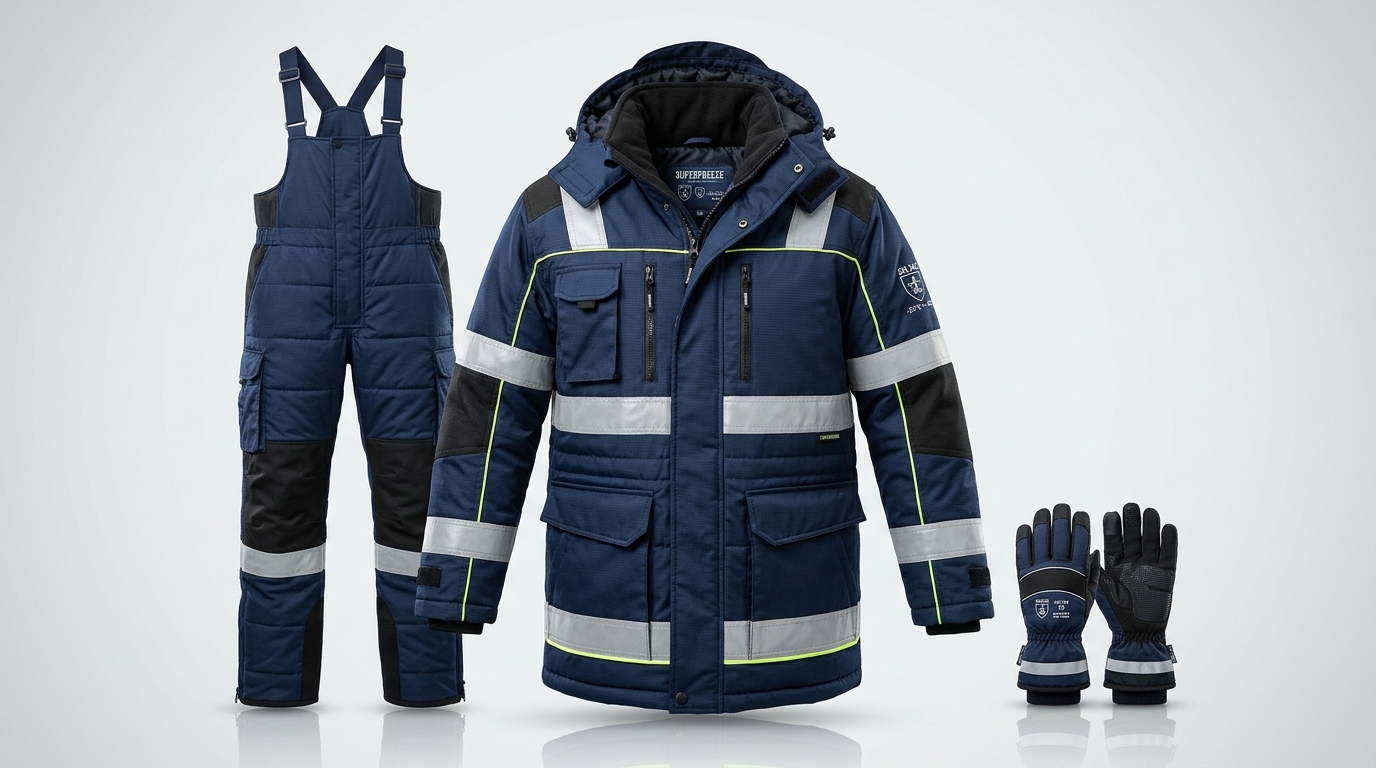
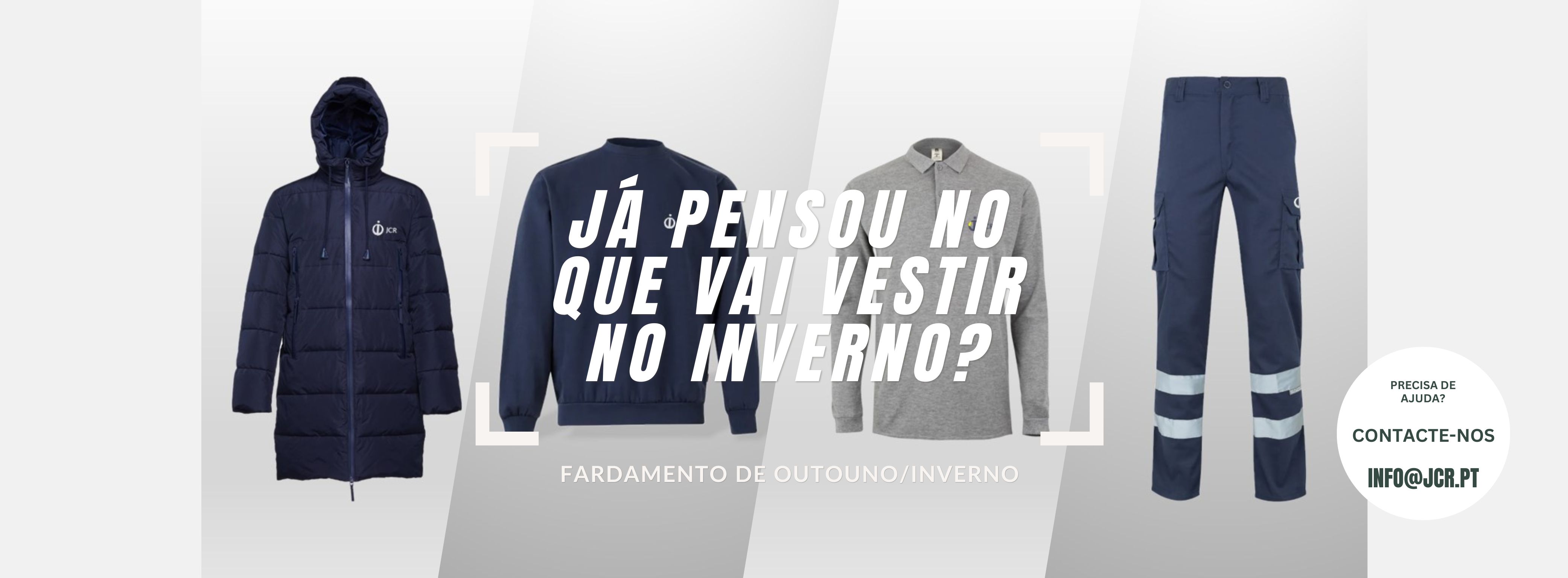
- Workwear and Work Clothing Catalog: Reinforced twill trousers, technical polos, thermal jackets, parkas, and waterproof clothing.
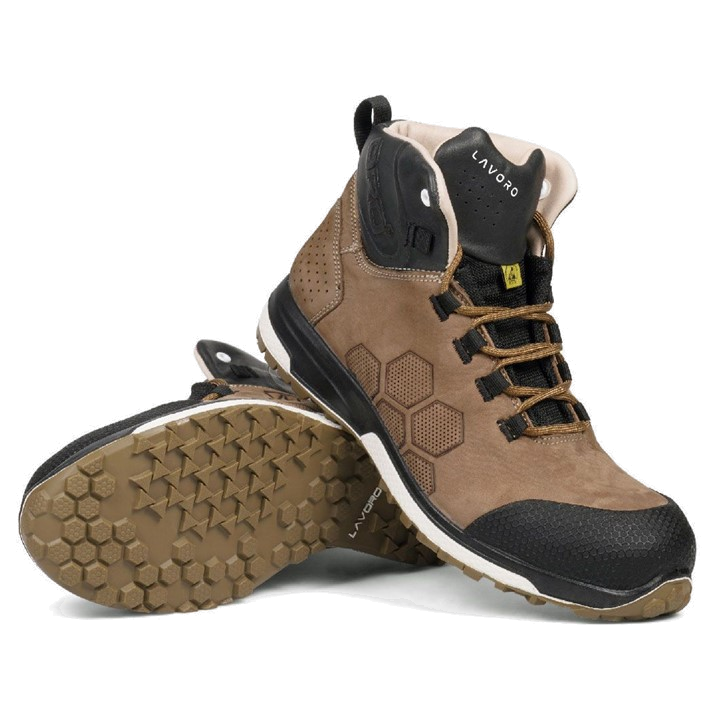
- EN ISO 20345 Certified Safety Footwear: S1P, S3, and S7 safety boots and shoes with protective toe caps and anti-perforation insoles.
- In-House Customization Workshop: High-durability embroidery and technical printing carried out at our facilities in Martingança.
Need Technical Support or a Quote for Your Company?
Our commercial consultants and safety technicians analyze your sector's needs and present tailored proposals with special conditions for corporate fleets:
- 📞 Direct Telephone: +351 244 111 200
- ✉️ Commercial Email: webstore@jcr.pt or info@jcr.pt
- 📍 Address: Av. Nª Sª de Fátima nº27, 2445-761 Martingança Gare, Leiria