The Tradition and Technical Challenge of Safety in the Glass Industry
The glass industry — both in the manufacture and moulding of hollow glass (bottles, jars, and utility items) and in the cutting and tempering of flat glass for architecture and construction — is one of the industrial sectors with the most complex and demanding occupational risk profiles.
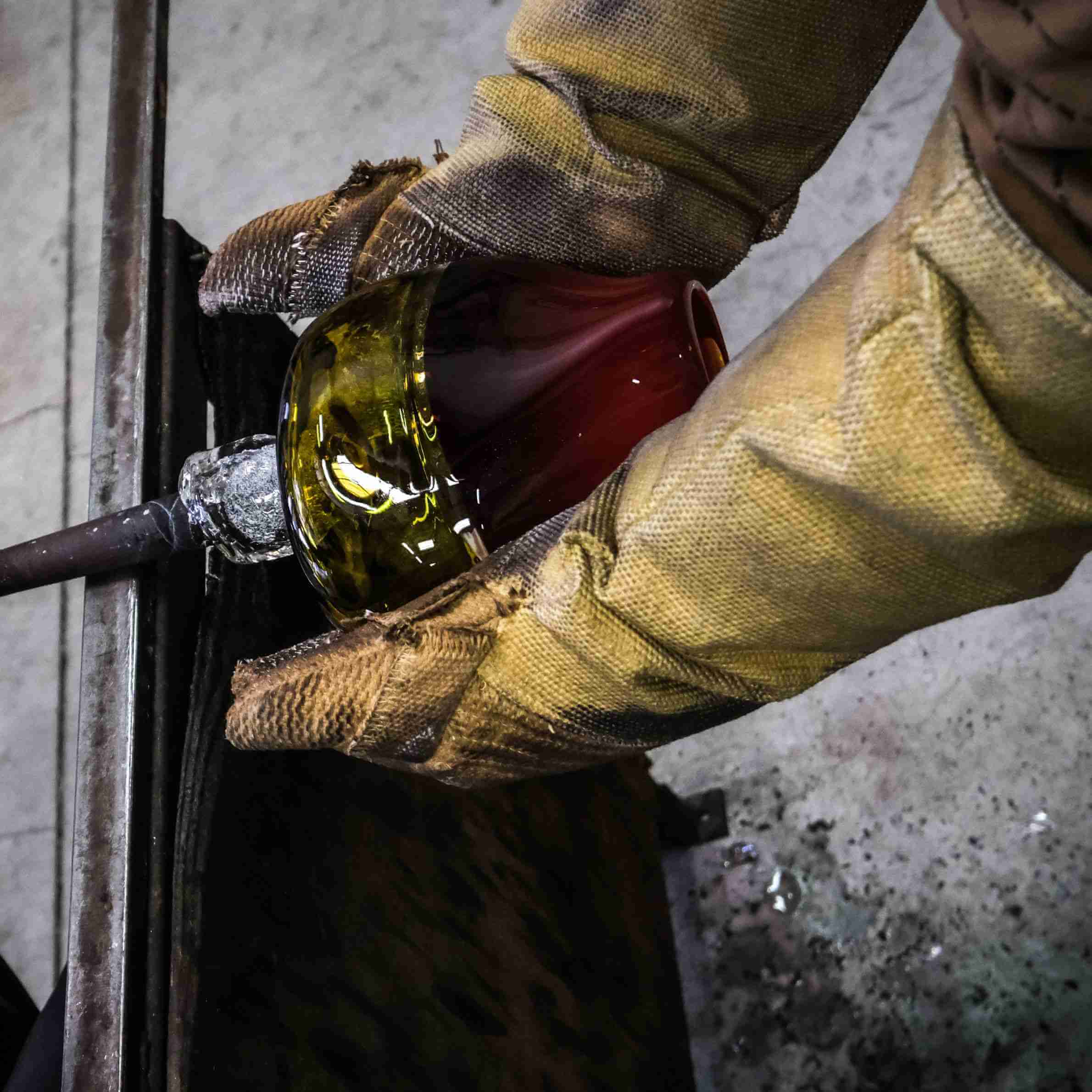
In the history of J C R, Lda., founded in 1972 in Martingança, in the municipality of Alcobaça, the connection to glass is umbilical. The company's own journey was forged through an innovative heavy cotton glove developed by the founders — Joaquim Custódio Rodrigues and Joaquina Vicência Salteiro — to combat the premature wear and burns faced daily by workers at the furnaces and cooling lines of Marinha Grande and the surrounding areas.
Today, European standards and material technology have evolved radically. Working with molten glass, handling sheets with sharp edges, or operating sorting lines requires meticulous selection of certified Personal Protective Equipment (PPE).
1. Hand and Arm Protection: The Extreme Cut vs. Heat Binomial
The greatest hazard in glass lines lies in the simultaneity of extreme mechanical cut risk and contact thermal risk. A glove that only protects against cuts can easily melt or transfer heat; on the other hand, a thick thermal glove can eliminate the dexterity needed to handle fragile parts.
A. Level F Cut-Resistant Gloves (EN 388 Standard / ISO 13997)
When cutting and handling flat glass, the sheets exert continuous pressure and linear sliding over the fingers and palm. Gloves must compulsorily achieve the maximum level of blade cut resistance under pressure: Level F according to the TDM test of the EN 388 Standard (resistance exceeding 30 Newtons).
- High-performance fibers with high-density polyethylene (HPPE) or aramid (Kevlar®) coated stainless steel threads.
- Micro-porous nitrile or technical polyurethane coatings that leave no silicone marks on virgin glass, ensuring maximum grip even with soluble cutting oils.
B. Contact Heat Resistance (EN 407 Standard)
In hollow glass manufacturing, items exiting forming machines onto the annealing line maintain surface temperatures between 100ºC and 250ºC.
- Gloves must bear the EN 407 certification with a minimum classification of Level 2 for contact heat (withstands 250ºC for at least 15 seconds without the internal temperature increasing by more than 10ºC).
- Aramid mesh structures reinforced with a heavy thermal cotton lining ensure heat dissipation without combustion.
C. Forearm Protection Sleeves
Most severe cuts and vascular accidents in the glass sector occur not on the hands, but on the radial artery and forearm when a sheet of glass gives way or breaks during transport.
- The use of cut-resistant protection sleeves (with a thumb slot that prevents the sleeve from slipping) is strictly mandatory at all cutting and dispatch benches.
2. Safety Footwear for the Glass Industry: Toecap and HRO Sole
On the glass industry shop floor, two severe risk factors accumulate: sharp fragments of broken glass ("shards") and areas with hot surfaces in the vicinity of the furnaces.
When selecting safety footwear, the OHS team must verify:
- Sole with Contact Heat Resistance (HRO Marking):
- The nitrile rubber sole tested according to EN ISO 20345 must withstand 300ºC of direct contact without melting, cracking, or degrading.
- Non-Metallic Anti-Perforation Insole (PS or PL Marking):
- Essential to prevent the plantar penetration of microscopic glass splinters that pierce conventional single-polyurethane soles.
- Full-Grain Natural Leather or Water-Repellent Treatment:
- Prevents the encrustation of silica dust and release agent powders into the pores of the footwear, substantially extending the lifespan of the boot.
3. Facial, Eye, and Respiratory Protection
- Glasses and Visors with High-Speed Impact Resistance (EN ISO 16321 / EN 166 Standard): The sudden breakage of glass under thermal stress projects fragments at high speed. Protective glasses with optical class 1 polycarbonate lenses and enhanced anti-scratch treatment are indispensable. For blowing or furnace charging work, full face shields with infrared (IR) radiation reflective treatment are recommended.
- Protection against Raw Material Dust: In the preparation of mixtures (silica sand, sodium carbonate, and mineral additives), respirable dust requires the use of masks with a minimum protection level of FFP2 or FFP3.
4. How to Develop the Specifications with JCR
Each glass factory has its own thermal processes and handling rates. An ideal glove model for a pharmaceutical packaging unit may be unsuitable for a heavy packaging glass or industrial cutting factory.
The technical team at J C R, Lda. conducts performance tests in actual factory contexts, providing certified technical samples and customized proposals for bulk corporate purchasing.
- 📞 Direct Technical Contact: +351 244 111 200
- 📧 B2B Quotation Requests: webstore@jcr.pt | info@jcr.pt
- 📍 Address: Av. Nª Sª de Fátima nº27, 2445-761 Martingança Gare, Portugal