The True Cost of a Uniform That Can't Withstand the Laundry
In the hospitality and restaurant industry, the unit purchase price of a chef's jacket, apron, or tunic represents only a fraction of its real cost. The decisive factor in a hotel's annual budget is the cost per wash.
Garments made from unsuitable fabrics or customized with low-durability printing quickly suffer from the intensive cycles of hotel laundries:
- Shrinkage in sleeves and length after the first few washes at 60°C.
- Accelerated fading in dark tones (black, navy blue, burgundy, or anthracite).
- Pilling formation in areas of constant friction (aprons, hips, and cuffs).
- Cracking or peeling of the logo when applied using non-industrial vinyl or transfer.
Which Fabric Composition to Choose by Area?
1. Polyester / Cotton Blend (65% Polyester / 35% Cotton)
This is the most balanced standard for chef jackets, front-of-house aprons, service trousers, and housekeeping tunics:
- Dimensional stability: polyester prevents shrinkage and drastically reduces the need for ironing (easy-care).
- Breathable comfort: cotton ensures a pleasant feel and moisture absorption during hot shifts.
- Durability: withstands repeated professional wash cycles while keeping colors vibrant for much longer.
2. 100% Cotton vs. Elastane Blends
- 100% Cotton offers excellent breathability in high-temperature kitchens, but requires more ironing effort and can shrink more easily if it hasn't been pre-shrunk.
- Fabrics with 2% to 4% Elastane or Mechanical Stretch are ideal for Housekeeping and Reception, allowing total mobility without sagging at the knees or elbows.
3. Appropriate Fabric Weight
- Reception and Front-of-House Shirts: 115 to 140 g/m² (fresh, elegant, and with a good drape).
- Chef Jackets and Tunics: 175 to 210 g/m² (balance between splash protection and thermal lightness).
- Professional Aprons: 190 to 245 g/m² (firm structure that doesn't curl during service).
Computerized Embroidery vs. Printing in Hospitality
The choice of customization method directly dictates the longevity of your hotel or restaurant's brand image. Also check out our detailed comparison in Embroidery vs. Printing vs. Transfer:
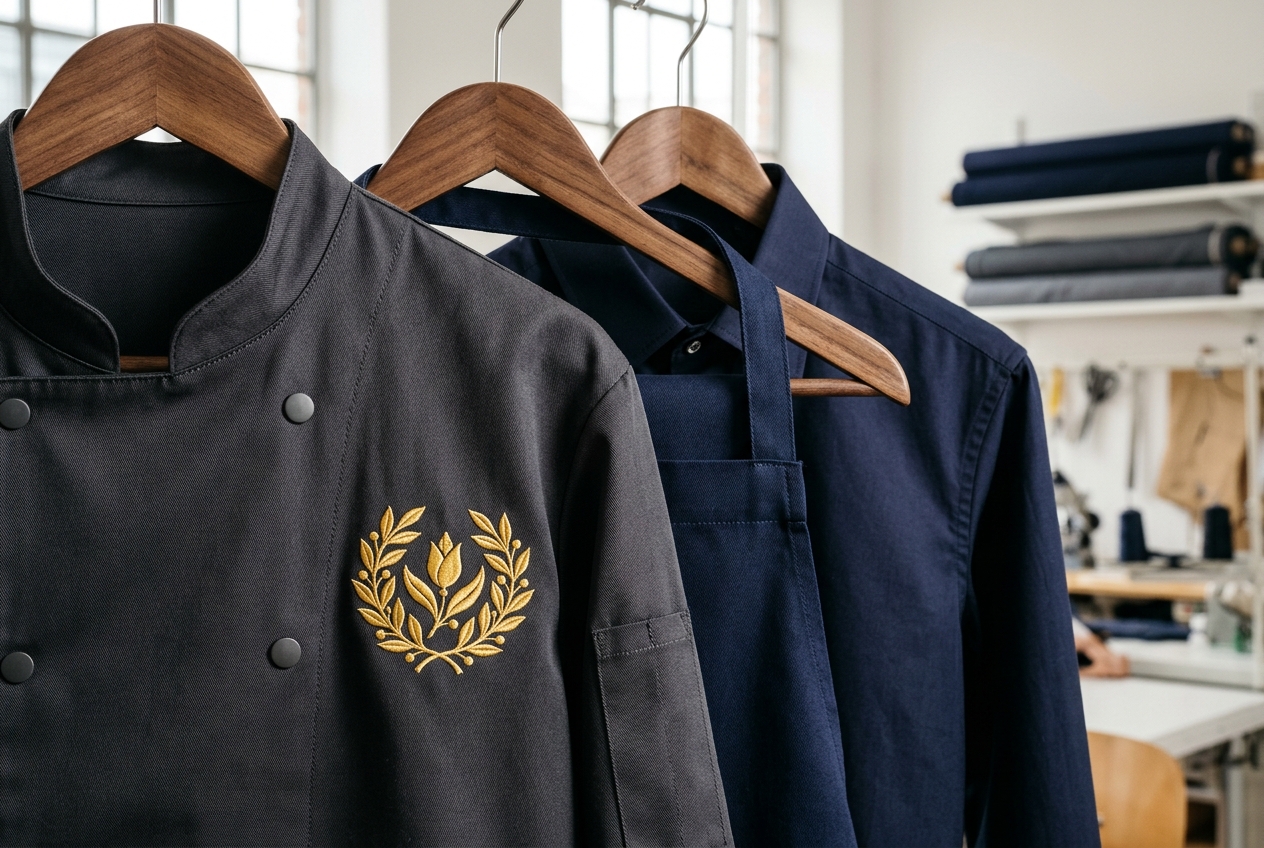
- Computerized Embroidery (Top Recommendation for HORECA): High-tenacity industrial polyester threads resist frequent washing, professional detergents, and steam ironing, maintaining the embossed look and premium appearance required by 4* and 5* hotels.
- Screen Printing or Technical Transfer: Interesting alternatives for temporary events, promotional t-shirts, or seasonal support teams, where unit cost for large quantities is the priority.
Best Practices to Extend the Lifespan of Uniforms
- Follow the manufacturer's label regarding maximum washing and tumble-drying temperatures.
- Separate greasy kitchen garments from light-colored reception shirts.
- Avoid chlorine bleach on dark items or garments embroidered with colored threads, opting for oxygen-based bleaching agents when necessary.
In-House Customization at J C R, Lda.
At J C R, Lda., we exclusively select uniform garments prepared for intensive professional use and perform embroidery and customization in our own workshop in Martingança, ensuring total quality control and color consistency for future reorders.
Browse our Hospitality and Restaurant Uniforms catalog or request a digital mockup through our Uniform Customization service.