What is PPE? Technical and Legal Definition
According to European Regulation (EU) 2016/425, Personal Protective Equipment (PPE) is defined as any device, accessory, or means designed to be worn or held by a person for protection against one or more risks likely to threaten their health or safety.
In Portugal, the correct application of PPE is a cornerstone of the occupational accident and disease prevention system. However, doubts persist regarding risk categories, the financial obligations of companies, and worker responsibilities.
In this article, the JCR team outlines the Portuguese legal framework and clarifies where and how to purchase PPE that is 100% compliant with ACT (Portuguese Authority for Working Conditions) inspections.
1. The Three PPE Risk Categories
European legislation classifies equipment into three tiers with increasing certification requirements:
- Category I (Minimal Risks): Protection against superficial mechanical injuries, weak sunlight, or water (e.g., gardening gloves, sunglasses). Certified via manufacturer self-certification.
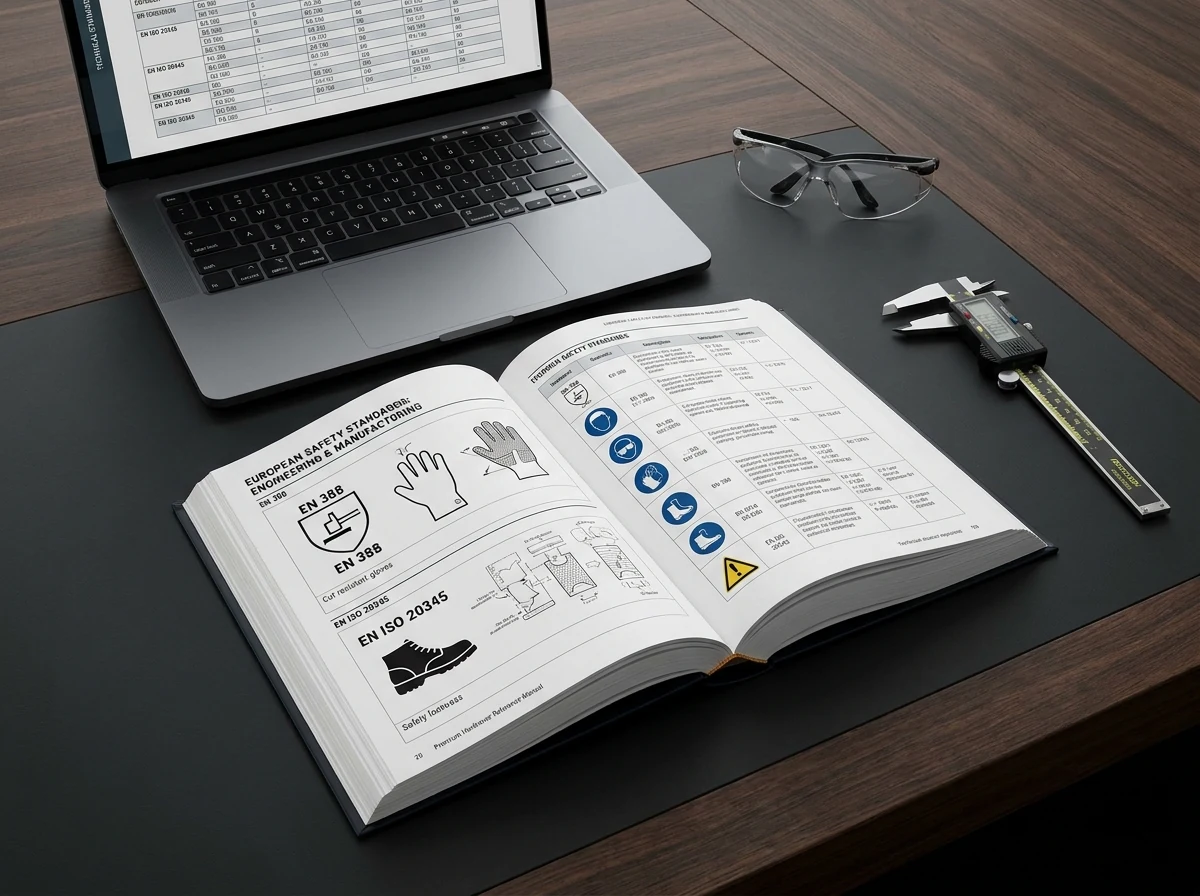
- Category II (Medium Risks): Most standard construction and factory equipment, such as safety footwear (EN ISO 20345), safety helmets (EN 397), and mechanical protection gloves (EN 388). Requires EU type-examination by an independent Notified Body.
- Category III (Severe or Fatal Risks): Equipment where the consequences of failure may cause irreversible damage or death: fall protection (EN 361 harnesses), respiratory protection (EN 149 filters and masks), protection against electric arcs or highly toxic chemicals. Requires ongoing periodic audits of the manufacturer's quality system.
2. What Portuguese Law Says: Rights and Obligations
A. The Principle of Free Provision (Who Pays for PPE?)
Article 15 of Law no. 102/2009 (Legal Regime for the Promotion of Occupational Safety and Health) expressly determines:
«Occupational safety, hygiene, and health measures prescribed by law may not, under any circumstances, involve financial costs for workers.»
This means that companies are legally obligated to provide all necessary PPE free of charge. It is strictly illegal to deduct the cost of equipment from the payslip or charge deposits.
B. The Principle of the Hierarchy of Prevention Measures
The Labor Code establishes that PPE is the last line of defense. Before resorting to PPE, the company must:
- Eliminate the hazard at the source.
- Replace the hazardous with the non-hazardous.
- Adopt Collective Protection Equipment (CPE), such as guardrails, safety nets, and fume extraction systems.
- Resort to PPE only when risks cannot be avoided through collective measures.
C. Worker Duties
Workers have the legal duty to:
- Correctly use the provided PPE throughout the entire period of exposure to the risk.
- Follow the instructions for use and training provided by the company.
- Ensure the equipment is kept in a good state of conservation.
- Immediately report malfunctions or excessive wear.
Unjustified refusal to use mandatory PPE constitutes a serious disciplinary offense, subject to penalties under the terms of the Labor Code.
3. Where to Buy PPE in Portugal with Guarantee and Speed?
When choosing a PPE supply partner for your company, ensure that:
- All items bear genuine CE marking stamped on the product.
- The supplier delivers the EU Declaration of Conformity and the Instruction Manual in Portuguese.
- There is permanent stock and fast delivery capability to prevent operational downtime.
JCR (J.C.R, Lda.), founded in 1972 in Martingança, is one of Portugal's historical references in the distribution of Personal Protective Equipment and Workwear. We represent internationally renowned brands (3M, Delta Plus, Lavoro, Showa, Lebon, Sinalux) and provide a modern online store at jcr.pt featuring:
- 24h to 48h deliveries throughout mainland Portugal.
- Free shipping on orders over €225.
- Specialized technical support and customized corporate allocation simulations.
Browse our wide selection of Personal Protective Equipment (PPE) or request a quote from our sales team.