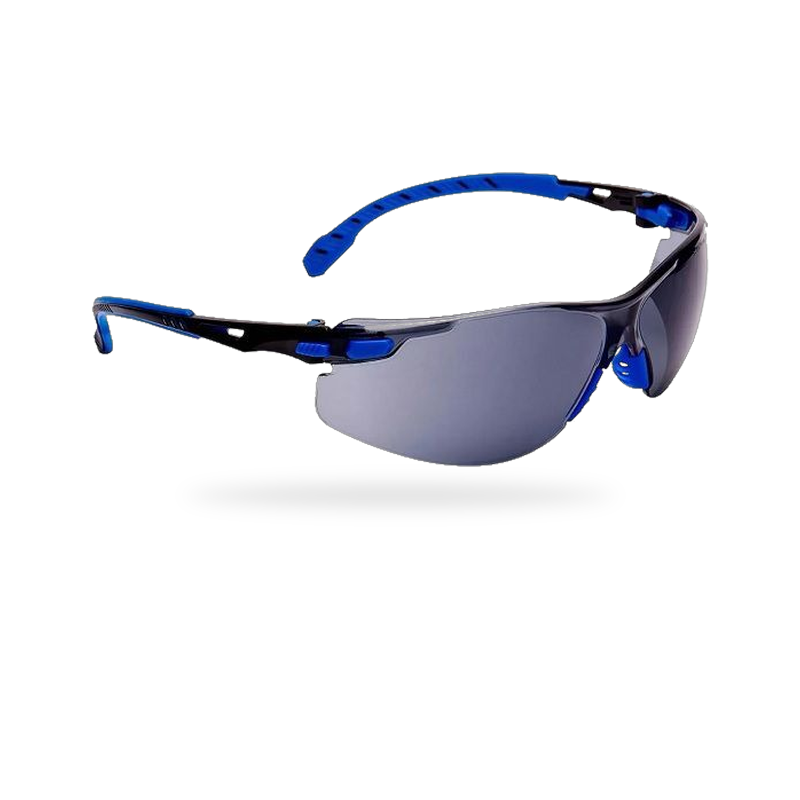
The Great Transition in Workers' Eye and Face Protection
For over two decades, the European standard EN 166:2001 (Personal eye-protection — Specifications) was the undisputed bible governing the manufacture, testing, and certification of all safety spectacles, goggles, and face shields within the European Union. Along with its satellite standards—such as EN 170 (UV filters), EN 172 (sunglare filters for industrial use), and EN 169/175 (welding)—it established the language that all Occupational Safety Technicians (OST) and industrial buyers became accustomed to reading on frames and lenses.
However, the globalization of industrial processes and the need for more realistic and rigorous laboratory testing dictated its replacement. The International Organization for Standardization (ISO) and the European Committee for Standardization (CEN) unified global criteria and published the EN ISO 16321 standard family, of which Part 1 (EN ISO 16321-1:2022) establishes the new general requirements for occupational use.
This shift directly affects technical datasheets, lens labeling, ballistic resistance tests, and even the ergonomics of the models available in the JCR catalog.
In this exclusive technical guide, JCR's eye protection experts analyze the structural differences compared to the old EN 166 and guide companies in procuring equipment that complies with the new requirements.
1. What Does the EN ISO 16321 Standard Family Replace?
The new regulatory architecture not only replaced EN 166 but also consolidated and reorganized a dozen historical standards that were previously scattered:
- EN ISO 16321-1:2022: Replaces EN 166:2001 (General requirements), EN 170 (Ultraviolet filters), EN 171 (Infrared filters), and EN 172 (Industrial sunglare filters).
- EN ISO 16321-2:2022: Replaces EN 169 and EN 175 (Eye and face protectors for welding and allied processes).
- EN ISO 16321-3:2022: Replaces EN 1731 (Mesh eye and face protectors for forestry, brush clearance, and gardening).
2. The Major Shift in Mechanical Impact Resistance
The most radical change for industrial users lies in the codes for ballistic impact resistance of high-speed particles (e.g., cutting sparks, angle grinder chips, or chiseling fragments).
The former EN 166 classification (S, F, B, A) has been restructured into alphanumeric levels featuring new projectile speeds and diameters:
| Old EN 166 | Old Test (Projectile / Speed) | New EN ISO 16321-1 Marking | New Impact Test | Typical Equipment Application |
|---|---|---|---|---|
| S | Increased robustness (22 mm steel ball drop at 5.1 m/s) | Basic Level | Integrated general mechanical robustness requirement | Reading glasses or lightweight protection with no risk of chip projection. |
| F | Low energy impact: 6 mm steel ball at 45 m/s (162 km/h) | Level C | Ballistic impact at 45 m/s | Safety spectacles with conventional temples. Protection against filings and light sparks. |
| (Did not exist) | (Regulatory gap) | Level D | New threshold at 80 m/s (288 km/h) | New intermediate category: Reinforced-temple spectacles and advanced goggles. |
| B | Medium energy impact: 6 mm steel ball at 120 m/s (432 km/h) | Level E | Ballistic impact at 120 m/s | Sealed goggles and lightweight face shields. Prohibited for open-temple spectacles. |
| A | High energy impact: 6 mm steel ball at 190 m/s (684 km/h) | (Specific tests) | Industrial face shields for extreme risks | Full face protection shields mounted on helmets or headgear. |
[!IMPORTANT] The New Level D (80 m/s): The creation of Level D resolved a classic problem: many metalworking workers needed more resistance than the 45 m/s provided by Level F, but refused to wear mask-type goggles (Level B) due to excessive heat. Level D allows for the design of compact, comfortable hybrid glasses that withstand violent impacts from milling and cutting chips up to 288 km/h.
3. Tests on ISO Anthropometric Headforms (Facial Fit)
One of the advancements most applauded by occupational health technicians is the revolution in test headforms:
- In the old EN 166: All laboratory tests were performed on a single standard European mannequin head, predominantly male and of medium dimensions. As a result, certified glasses often left dangerous lateral gaps when worn by women or workers with narrower faces.
- In the new EN ISO 16321-1: Worldwide anthropometric headforms from the ISO 18526-4 standard were adopted, covering a wide diversity of facial morphologies (sizes 1-M for average male, 1-F for female/narrow face, 2-M for large male).
- What this guarantees: New models certified by prestigious manufacturers such as Bollé Safety, Medop, and 3M offer vastly superior orbital sealing, preventing dust and splinters from entering through blind spots.
4. Specific Fields of Use: Chemical Protection, Dust, and Radiation
The new standard has updated the environmental hazard protection codes on both frames and lenses:
| Occupational Hazard | Old Code (EN 166) | New Code (EN ISO 16321-1) | Practical Equipment Requirement |
|---|---|---|---|
| Liquid Droplets and Splashes | 3 | Proven liquid tightness requirements | Requires sealed goggles with indirect ventilation or a face shield (laboratories and chemical cleaning). |
| Coarse Dust (> 5 micrometers) | 4 | Protection against suspended solid particles | Goggles with inner foam sealing that blocks suspended sand and cement. |
| Gases, Vapors, and Fine Dust (< 5 µm) | 5 | Total hermetic seal without direct ventilation | 100% airtight goggles without breathing holes (e.g., chemical industry). |
| Short-Circuit Electric Arc | 8 | Combined testing with the IEC 61482 standard | Special transparent visors with a minimum thickness of 1.4 mm that prevent thermal burns and extreme UV. |
| Molten Metals and Hot Solids | 9 | Non-adherence test for incandescent metal | Visors for foundries and steel mills that do not melt when hit by drops of liquid iron at 1,450 ºC. |
5. Special Lens Treatments: Anti-Scratch and Anti-Fog
Surface treatments remain crucial for productivity on polycarbonate lenses:
- Surface Abrasion Resistance (Anti-Scratch): The standard maintains rigorous oscillating sand-drop tests on the lens. Lenses with reinforced treatment ensure that the glasses do not become "foggy" or scratched during the first weeks of work on construction sites or in quarries.
- Fog Resistance (Anti-Fog): The test measures the time a lens remains transparent when transferred from a cold environment to a warm, steam-saturated environment. Next-generation anti-fog technologies (such as Bollé's Platinum coating) easily exceed minimum requirements, making them indispensable for anyone working in cold storage rooms or wearing a respiratory mask simultaneously.
6. Transition Periods and Validity of Current Eyewear
If your company has stocks of eyewear certified under the old EN 166:2001, you do not need to discard them or suspend their use:
- EC type-examination certificates issued under EN 166 retain their legal validity until the end of the 5-year validity period stipulated in the document issued by the Notified Body. 2 Equipment in stock can continue to be commercialized and distributed to workers until the certificates expire (many are valid until 2027 and 2028).
- However, all new models entering the European market now are exclusively certified under EN ISO 16321-1:2022.
- When reviewing your specifications or PPE matrix, your company should begin familiarizing technicians with the new designations (C, D, E replacing F and B).
Need to Upgrade Your Team's Eye Protection?
The technical team at JCR supports your company in workplace audits and in supplying safety glasses, visors, and prescription safety solutions featuring the latest European certifications:
- Technical Customer Support: +351 244 111 200 | webstore@jcr.pt
- Explore the catalog: JCR Face and Eye Protection