Workwear as a Critical Hygienic Barrier in the Food Sector
In the food processing industry—from slaughterhouses, bakeries, dairies, and cold-cut facilities to large collective catering kitchens—workwear has a dual mission: to protect the worker against the hazards of the factory environment and, above all, to protect the food against any microbiological, chemical, or physical contamination.
The HACCP (Hazard Analysis and Critical Control Points) system and European Union Regulation (EC) No. 852/2004 dictate that work clothing must not constitute a potential source of cross-contamination. A single button that detaches from a lab coat and falls onto a packaging line can lead to the recall of entire batches of products, losses of tens of thousands of euros, and irreparable reputational damage to the brand.
In this article, JCR details the essential requirements that should guide the procurement of technical workwear for the food sector.
1. The 4 Design Rules for HACCP-Compliant Clothing
A standard lab coat or common work jumpsuit cannot be used in food production lines. Garments certified for HACCP comply with specific industrial tailoring principles:
1. Total Absence of Traditional Sewwn Buttons
- Plastic buttons sewn with traditional thread suffer accelerated wear and tear from frequent industrial laundering and eventually come loose.
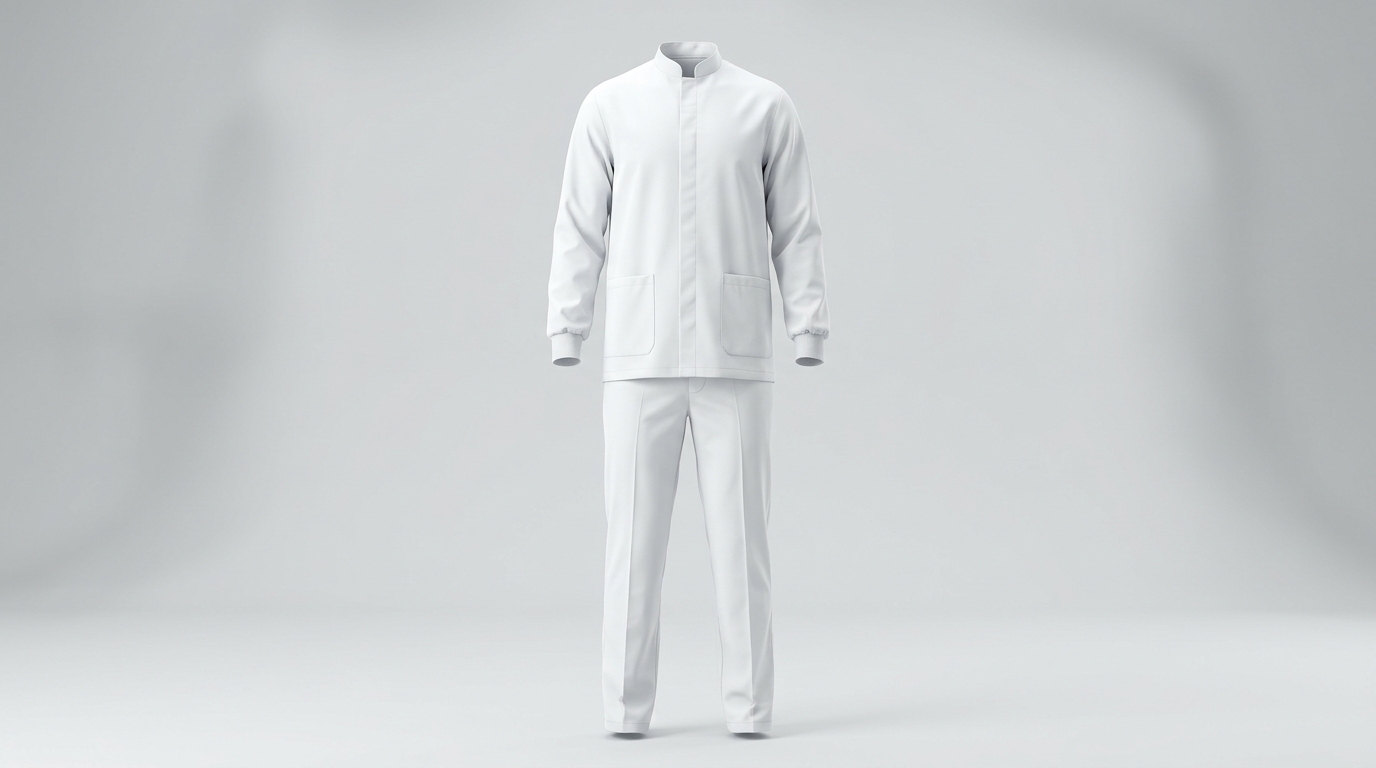
- Food industry uniforms exclusively use concealed stainless steel press-studs or zippers covered by a double protective flap with medical-grade technical velcro.
2. Elimination of Exterior Pockets Above the Waist
- The use of lab coats with chest pockets is strictly prohibited.
- An operator leaning over a food conveyor belt or preparation vat risks items placed in the chest pocket (pens, digital thermometers, mobile phones, coins) falling directly into the food.
- Pockets, when present, are placed only on the inside of the garment or below waist level and feature secure closures.
3. Elasticated or Hermetically Adjusted Cuffs
- Sleeves must not be loose or allow body hair or undergarments to come into contact with food handling surfaces. Cuffs are finished with high-density elastic knitwear that fits snugly underneath nitrile gloves.
4. Light Colors for Immediate Dirt Detection
- White, light blue, or pearl gray dominate the food industry because they make any splash, blood stain, oil, or grease immediately visible to the naked eye, forcing the immediate replacement of the garment before cross-contamination occurs.
2. Resistance to Thermal Washing: Eliminating Pathogens
In the food industry, workwear cannot be washed at 30 °C or 40 °C like ordinary household laundry:
- Dangerous bacteria such as Listeria monocytogenes, Salmonella enterica, and Escherichia coli survive cold washes.
- Clothing must be made of high-quality twill (65% Polyester / 35% Cotton blends with weights between 190 g/m² and 245 g/m²) that withstands continuous cycles of industrial washing at disinfection temperatures equal to or exceeding 60 °C and up to 90 °C, without shrinking, losing color, or deforming the fiber structure.
3. Food Occupational Footwear: Maximum Hygiene and Grip
The floor of a food factory or industrial kitchen is permanently exposed to water, animal fats, vegetable oils, and foaming cleaning detergents.
Safety footwear for the sector complies with the following technical requirements:
- Water-Repellent and Washable Microfiber Upper: Replaces traditional leather, which absorbs moisture and rots when exposed to blood or grease. Technical microfiber is waterproof, breathable, and can be washed and disinfected directly in a washing machine at 40 °C.
- Maximum Grade Slip-Resistant Sole (SR / SRC): Featuring rapid drainage channels that prevent the hydroplaning effect on ceramic floors wet with detergent (Sodium Lauryl Sulfate) and steel floors with glycerol.
- Composite Safety Toe Cap (200J): Essential in cold storage facilities and wet areas, ensuring that the footwear does not conduct cold to the feet.
- Seamless Design: Minimalist and smooth design, without seams where bacteria can lodge and proliferate.
4. Corporate Personalization: Direct Embroidery vs. Heat Transfer
Even in the food industry, companies want to reinforce their visual identity with their brand logo. However, there are rules:
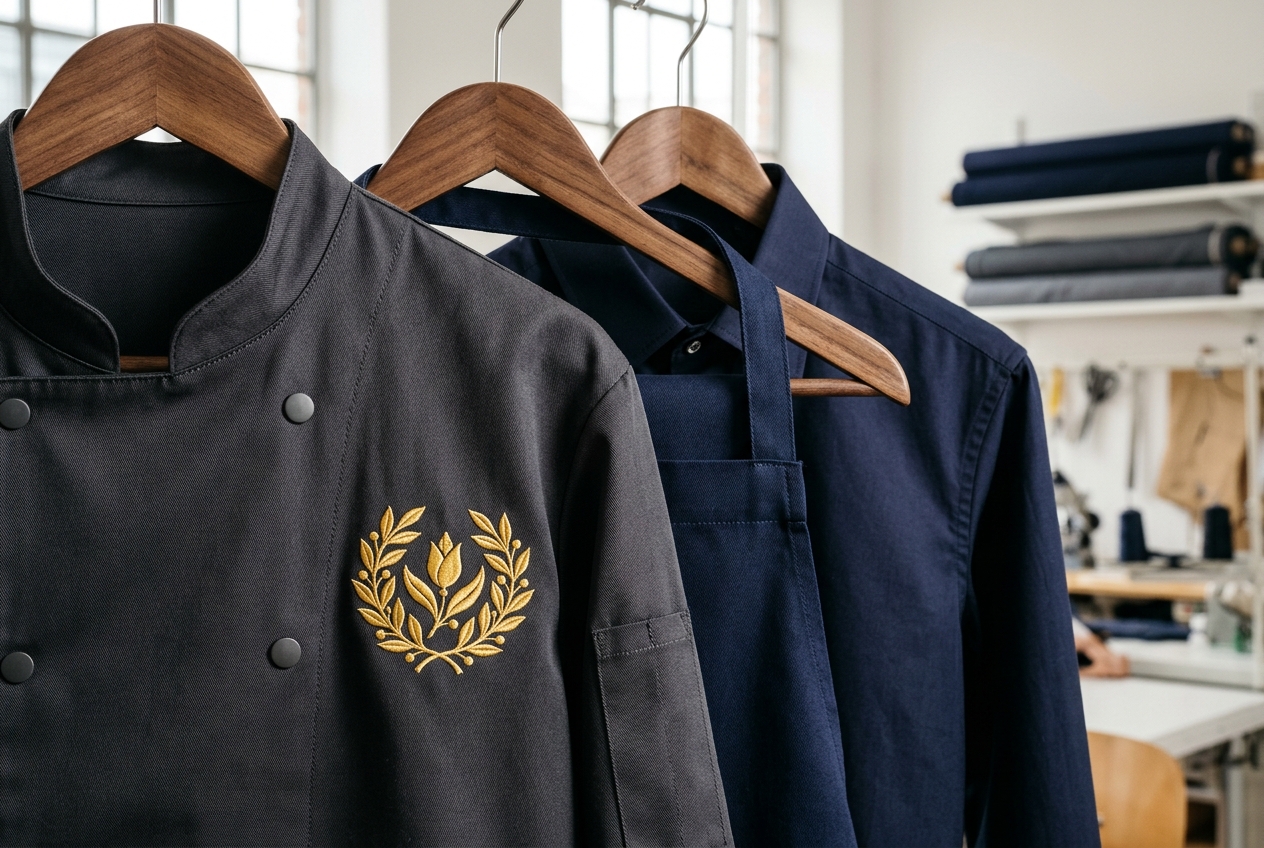
- Traditional embroidery creates thousands of perforations in the garment; if the back of the embroidery is not protected with a heat-bonded interlining, the threads can fray or irritate the employee's skin.
- High-durability food-grade polyurethane transfer heat-application is often the most hygienic option, creating a smooth, sealed surface that is easy to disinfect.
At JCR, we have our own textile personalization workshop and a complete selection of lab coats, trousers, and footwear certified for the country's most demanding HACCP quality plans.